
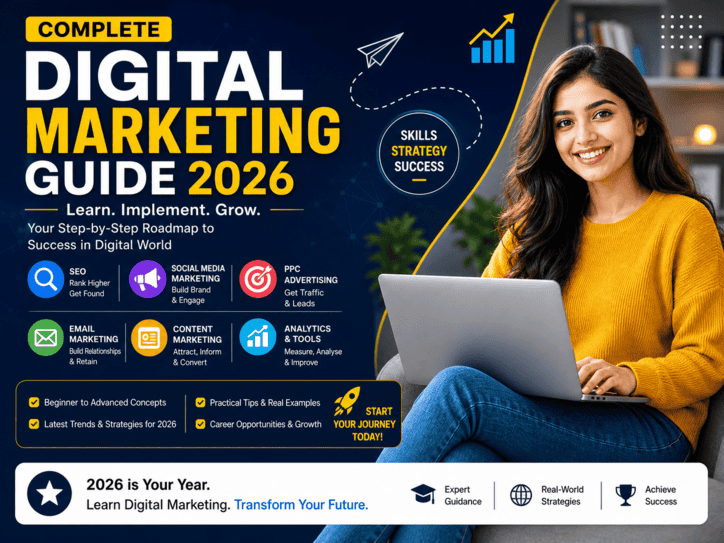
Introduction to Digital Marketing in 2026
Digital marketing has evolved into a crucial element of modern business, encompassing various techniques and strategies that leverage digital technologies. As we step into 2026, understanding digital marketing is more pertinent than ever, as it profoundly influences how businesses connect with consumers. This form of marketing utilizes online platforms to create awareness, drive engagement, and ultimately, convert leads into sales.
The significance of digital marketing in today’s landscape cannot be overstated. With a majority of consumers increasingly relying on online sources for information and purchasing decisions, businesses must adapt their marketing strategies to remain competitive. A comprehensive digital marketing guide for 2026 can illuminate the necessary tactics for those exploring digital marketing for beginners, highlighting key principles that should be embraced.
Several trends are shaping the future of digital marketing. Among these are advancements in artificial intelligence, which are transforming customer interactions through chatbots and personalized content. Additionally, the importance of data privacy has led to a shift towards more transparent marketing practices. Understanding the types of digital marketing, such as content marketing, search engine optimization (SEO), social media marketing, and email marketing, will enable professionals to tailor their strategies effectively.
As the digital landscape continues to evolve, marketers must remain agile, adapting their approaches to new technologies and consumer behaviors. This guide will explore the essential digital marketing strategies for 2026, providing insights on how to learn digital marketing efficiently. By following the outlined strategies, individuals can enhance their digital marketing career prospects and contribute to the growth of their organizations in an increasingly complex digital world.
Emerging Trends and Technologies
As we approach 2026, it is evident that various emerging trends and technologies will vastly influence the field of digital marketing. The adoption of artificial intelligence (AI) and machine learning is likely to be a game changer, enabling marketers to create highly personalized experiences. By analyzing vast amounts of data, AI can identify consumer preferences and predict future behaviors, leading to more effective digital marketing strategies in 2026.
Another noteworthy trend is the integration of augmented reality (AR) in marketing campaigns. AR offers immersive experiences that can enhance user engagement with products. For instance, brands in the fashion industry can utilize AR to allow potential customers to virtually try on clothes before making a purchase. This type of innovative interaction will redefine marketing tactics, attracting a wider audience while enhancing the online shopping experience.
Additionally, voice search is rapidly becoming a critical component in digital marketing for beginners and seasoned professionals alike. As smart speaker usage continues to grow, optimizing content for voice search is essential. Marketers must adapt their strategies to incorporate conversational language and voice-activated queries, ensuring they remain competitive in the evolving landscape of digital marketing.
Furthermore, the rise of video content will continue to dominate social media platforms, necessitating the development of creative video marketing strategies. With the increasing integration of platforms like TikTok and Instagram Reels, businesses need to create captivating short-form video content that resonates with audiences.
Finally, the importance of data privacy cannot be overstated, as consumers become more aware of their online activity. Digital marketers must prioritize transparency and develop trust with their audience, ensuring they adhere to the regulations governing data protection.
These emerging trends and technologies will not only shape the future of digital marketing but also present new opportunities for those pursuing a digital marketing career. As 2026 approaches, marketers must stay vigilant to adapt and thrive in this rapidly changing environment.
Social Media Marketing Evolution
As we look toward 2026, the landscape of social media marketing is poised for significant transformation. The emergence of new platforms and the continual evolution of existing ones will fundamentally change how businesses interact with their audiences. The rapid adoption of technologies like augmented reality (AR) and virtual reality (VR) within social media networks is expected to provide businesses with innovative avenues for engagement. As users seek immersive experiences, companies will need to adapt their digital marketing strategies for 2026 accordingly.
In addition to technological advancements, changes in user behavior will also influence social media marketing. Younger generations are gravitating toward platforms that prioritize authenticity and community engagement over traditional advertising. Businesses will have to rethink their approach, focusing on building relationships rather than merely pushing products. This shift necessitates a shift from standard digital marketing practices to more interactive and personalized strategies.
To effectively engage with audiences in this evolving environment, organizations should consider diversifying their social media presence. Experimenting with different types of digital marketing, such as influencer collaborations and user-generated content, will be vital in capturing audience attention. Incorporating short-form videos, live streaming, and interactive polls can make it easier for brands to reach a wider audience while encouraging genuine interaction.
Furthermore, profound data analytics will hold a crucial role in adjusting digital marketing strategies. Businesses must utilize the latest analytical tools to gain insights into user behavior and preferences, allowing for the customization of content that resonates more deeply with their target audience. By understanding emerging trends in digital marketing for beginners and established marketers alike, companies can successfully navigate this new terrain.
The Role of Data Analytics
In the realm of digital marketing, data analytics has emerged as a foundational element, transforming how businesses understand and engage with their audience. The integration of data analytics into digital marketing strategies 2026 enables organizations to derive meaningful insights from customer interactions and behaviors, ultimately guiding their marketing decisions. By analyzing various types of digital marketing metrics—such as website traffic, customer demographics, and engagement levels—businesses can create targeted campaigns tailored to meet the preferences and needs of their customers.
Data analytics provides a lens through which businesses can observe customer trends and patterns over time. For instance, by utilizing tools that track user engagement on different digital platforms, marketers can identify which channels yield the highest return on investment. This knowledge allows for better allocation of resources and efforts towards the most effective digital marketing for beginners initiatives, enhancing overall campaign performance.
Moreover, understanding the pivotal role of data analytics helps businesses refine their digital marketing strategies 2026. Marketers can leverage analytics to perform A/B testing, assessing which advertisements or content resonate more effectively with their audience. This iterative process not only improves customer targeting but also increases engagement and conversion rates. As a result, marketers are better equipped to make informed decisions, adapt to changing market conditions, and ultimately drive success in their digital marketing career.
In conclusion, the incorporation of data analytics in digital marketing is no longer optional; it is a necessity. By focusing on data-driven decision-making, businesses can enhance their marketing effectiveness, optimize customer experiences, and establish a competitive edge in an increasingly data-driven environment. As the digital marketing landscape continues to evolve, mastering how to learn digital marketing and utilize data analytics will be crucial for marketers aiming to thrive in 2026 and beyond.
Personalization and Customer Experience
In the realm of digital marketing, personalization has emerged as a pivotal strategy for enhancing customer experience. As brands strive to differentiate themselves in a highly competitive landscape, tailoring marketing efforts to individual preferences can significantly improve engagement and conversion rates. Personalization entails the use of advanced segmentation techniques that analyze customer behavior, demographics, and interests, allowing marketers to deliver content that resonates with the target audience.
One of the most effective approaches to personalization is harnessing data analytics. By leveraging big data, brands can gain insights into customer journeys and identify trends that inform their marketing strategies. For instance, understanding which digital marketing strategies in 2026 are yielding the highest returns can help businesses refine their targeting and messaging. This level of granularity in consumer insights is critical for developing a successful digital marketing guide for 2026 that emphasizes personalized customer experiences.
Moreover, automation plays a crucial role in scaling personalization efforts. Tools such as email marketing automation, recommendation engines, and chatbots enable brands to communicate with customers at the right time, with the right message. These automated systems can dynamically adjust content based on user interactions, thereby fostering a more engaging experience. As a result, companies can not only enhance customer satisfaction but also cultivate loyalty, which is vital in building a sustainable digital marketing career.
As we advance into 2026, businesses that prioritize personalization in their digital marketing for beginners will likely see a considerable advantage. This evolving landscape not only meets the growing expectations of consumers but also provides a framework for brands to create tailored experiences. Ultimately, personalization is not merely an option but a necessity in the modern digital marketing ecosystem.
Content Marketing Strategies for 2026
In the evolving landscape of digital marketing for beginners and seasoned professionals alike, content marketing remains a cornerstone of successful strategies. For 2026, content marketing is expected to incorporate various innovative approaches that resonate with target audiences while adapting to their changing preferences.
One of the predominant types of digital marketing will be the use of interactive and visually engaging content. Video content, podcasts, and immersive formats such as augmented reality (AR) are anticipated to dominate. This shift reflects a general trend towards experiences rather than just information transmission. Marketers will need to balance traditional content forms like blogs with these new interactive elements to maintain engagement.
Storytelling will play an essential role in shaping narratives that connect with consumers on a personal level. Crafting authentic stories surrounding brands and products not only enhances relatability but also builds trust and loyalty among audiences. Successful digital marketing strategies 2026 will harness the power of narratives that evoke emotions and encourage sharing across platforms.
Moreover, optimizing content for different platforms will be critical. Each social media and digital channel has unique characteristics, requiring tailored approaches to maximize impact. For example, short, catchy snippets may work well on platforms like Twitter and Instagram, while in-depth articles are more suitable for LinkedIn. Understanding how to learn digital marketing in this multi-channel environment will be fundamental for practitioners looking to advance their digital marketing careers.
As we approach 2026, successful marketers will need to stay ahead of trends and adapt their strategies continuously. By focusing on engaging, story-driven, and platform-optimized content, they will be well-positioned to meet the demands of an ever-evolving digital marketplace.
Influencer Marketing Trends
Influencer marketing has emerged as a key component of digital marketing strategies in recent years, and its significance is poised to further expand by 2026. As brands increasingly realize the power of influencers in shaping consumer behavior, understanding the evolving landscape of influencer marketing becomes critical for those engaged in digital marketing for beginners and experienced marketers alike. In the coming years, we can expect to witness a significant rise in various types of influencers, including micro and nano influencers, who often boast highly engaged and niche audiences.
Instead of focusing solely on influencers with large followings, brands are recognizing the value of partnering with individuals who have smaller, loyal communities. These influencers can foster trust and authenticity, leading to more effective brand collaborations. This trend aligns well with the ongoing shift towards authenticity as consumers become increasingly discerning about the sources of information affecting their purchasing decisions.
As the industry progresses, regulatory changes will also play a crucial role in shaping influencer marketing practices. Transparency will become paramount, as consumers demand clearer disclosure of partnerships and sponsored content. Brands will need to stay informed about these regulations to ensure compliance and maintain credibility with their audience. Failure to adhere to guidelines could result in reputational damage, which would be detrimental to any digital marketing career.
To maximize their reach, brands must adopt strategic approaches when collaborating with influencers. Developing long-term relationships, instead of one-off campaigns, can lead to more meaningful engagements. Additionally, brands should leverage innovative digital marketing strategies 2026, incorporating various platforms such as social media, blogs, and podcasts, to effectively communicate their message. By doing so, companies can create a well-rounded digital marketing guide 2026 that addresses the needs of both the brand and the influencer.
SEO and Search Engine Evolution
As we delve into the realm of digital marketing in 2026, it is essential to recognize that search engine optimization (SEO) practices continue to adapt and evolve in response to technological advancements and user behaviors. In 2026, the landscape of SEO will be profoundly impacted by developments in artificial intelligence (AI), voice search, and enhanced user experience. Marketers must stay informed about these changes, as they will dictate which strategies prove most effective.
The integration of AI into search algorithms has made understanding user intent a critical component of SEO. This evolution necessitates a shift from merely focusing on keywords to creating high-quality content that meets users’ needs in various contexts. Content optimization now involves natural language processing (NLP), which enables search engines to analyze sentiments and the context surrounding queries. Engaging with semantic search is a guiding principle of modern digital marketing for beginners and seasoned professionals alike.
Another significant shift in SEO is the growing prevalence of voice search. With the rising use of smart speakers and mobile devices, optimizing for voice queries has become pivotal. Marketers should focus on long-tail keywords and conversational phrases that align with how users verbally articulate their inquiries. Incorporating question-based content is a fruitful strategy to enhance visibility in voice search results.
Furthermore, the emphasis on user experience (UX) remains unwavering. In a competitive digital marketing environment, optimizing website speed, mobile responsiveness, and overall accessibility is crucial for ranking higher in search engine results pages. Adopting effective digital marketing strategies in 2026 will revolve around creating seamless user experiences that not only attract but retain visitors.
In conclusion, SEO in the context of digital marketing requires an ongoing commitment to learning and adapting. Understanding the complexities of search engine evolution will empower marketers to implement robust strategies that enhance their online presence, ultimately paving the way for a successful digital marketing career in an ever-changing landscape.
Conclusion and Future Outlook
The landscape of digital marketing is constantly evolving, making it essential for businesses and marketers to remain adaptable and proactive. This digital marketing guide 2026 has explored various aspects, including types of digital marketing, effective digital marketing strategies for 2026, and the best approaches for beginners to embark on their journey into this field.
As we look to the future, it is important to recognize emerging trends that are likely to shape digital marketing. For instance, the increasing reliance on artificial intelligence and machine learning tools offers new ways to analyze data and predict customer behavior. Marketers will need to embrace these technologies to craft targeted campaigns that resonate with their audiences.
Moreover, the rise of user-generated content and authentic engagement channels will challenge traditional advertising methods. Businesses should prioritize building genuine relationships with customers through various digital marketing channels. This fosters trust and loyalty, which are invaluable assets in today’s marketplace.
Furthermore, as consumer preferences evolve, an understanding of multicultural marketing and individualized consumer experiences will become vital. This entails a shift towards personalized content that caters to the unique needs of diverse demographic groups.
For those considering a digital marketing career, the opportunities are abundant. Learning digital marketing can be pursued through numerous resources, including online courses, workshops, and hands-on practice. Emphasizing continuous education and skills enhancement will be crucial for success in this dynamic field.
In conclusion, the future of digital marketing is bright but requires vigilance and adaptability. By understanding and implementing effective digital marketing strategies and keeping pace with technological advancements, businesses can remain competitive. Staying informed through comprehensive digital marketing guides will empower marketers, equipping them for the challenges that lie ahead.